This map is based on light pollution data updated in 2006 by David Lorenz. Attribution for original 2001 data: P. Cinzano, F. Falchi (University of Padova), C. D. Elvidge (NOAA National Geophysical Data Center, Boulder). Strategies for reducing light pollution include shielding outdoor fixtures so that light is directed only toward the area where it is needed, rather than upward toward the sky, selecting bulbs that don't emit excessive amounts of blue light and only providing as much illumination as is needed. 
Light pollution Contiguous United States MapPorn
light pollution noun artificial illumination of the night sky, often limiting visibility of faint stars or other celestial objects. Also known as photopollution or luminous pollution. machine noun apparatus consisting of interrelated parts with separate functions, used in the performance of some kind of work. map layer noun This interactive map shows the worldwide artificial night sky brightness at zenith (looking straight up) at sea level. The techniques used to calculate this data are important as they quantify night sky pollution levels, allowing us to monitor how the levels vary over time.
Interactive light pollution map USA and around the world. Locate dark sites allowing the best observance for star gazing. Find locations suitable for stargazing, a light pollution map, accessibility by car, space to park, travel time & distance, weather conditions and lunar phase.. Map Data Map data ©2023 GeoBasis-DE/BKG (©2009), Google, Inst. Geogr. Nacional. Map data ©2023 GeoBasis-DE/BKG (©2009), Google, Inst. Geogr. Nacional. 100 km 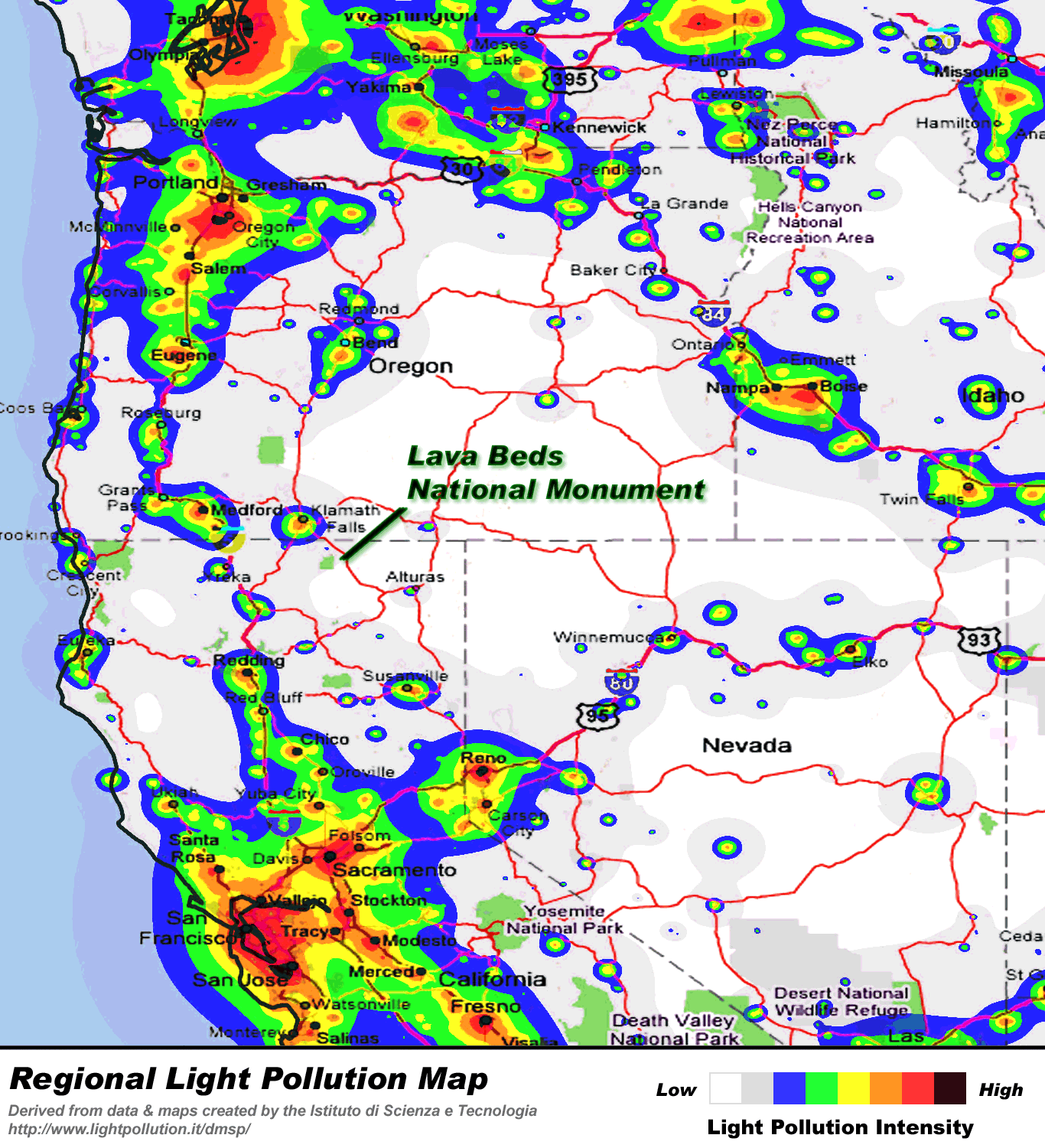
Night Sky Maps and Images Lava Beds National Monument U S National
VIIRS Day/Night Band (DNB) data are used for estimating population, assessing electrification of remote areas, monitoring disasters and conflict, and understanding biological impacts of increased light pollution. This Nighttime Lights (NTL) Backgrounder provides information about how these data are collected, examples showing how these data are. Light Pollution Map allows you to easily locate dark sites where the sky will not be affected by light pollution, allowing the best observance, star gazing, and photography of the night.
Recognition of the harmful impacts of light pollution started beginning in the twentieth century when light pollution across the United States increased significantly. The map below shows changes in levels of light pollution across the lower 48 U.S. states between the late 1950s and 2025. Today's map, from geographer and journalist, Tim Wallace, is a different perspective on light pollution in the United States. The map was created by subtracting population from light output, which highlights areas that throw off more light than predicted given their population density. On this style of map, it isn't the glowing metropolitan. 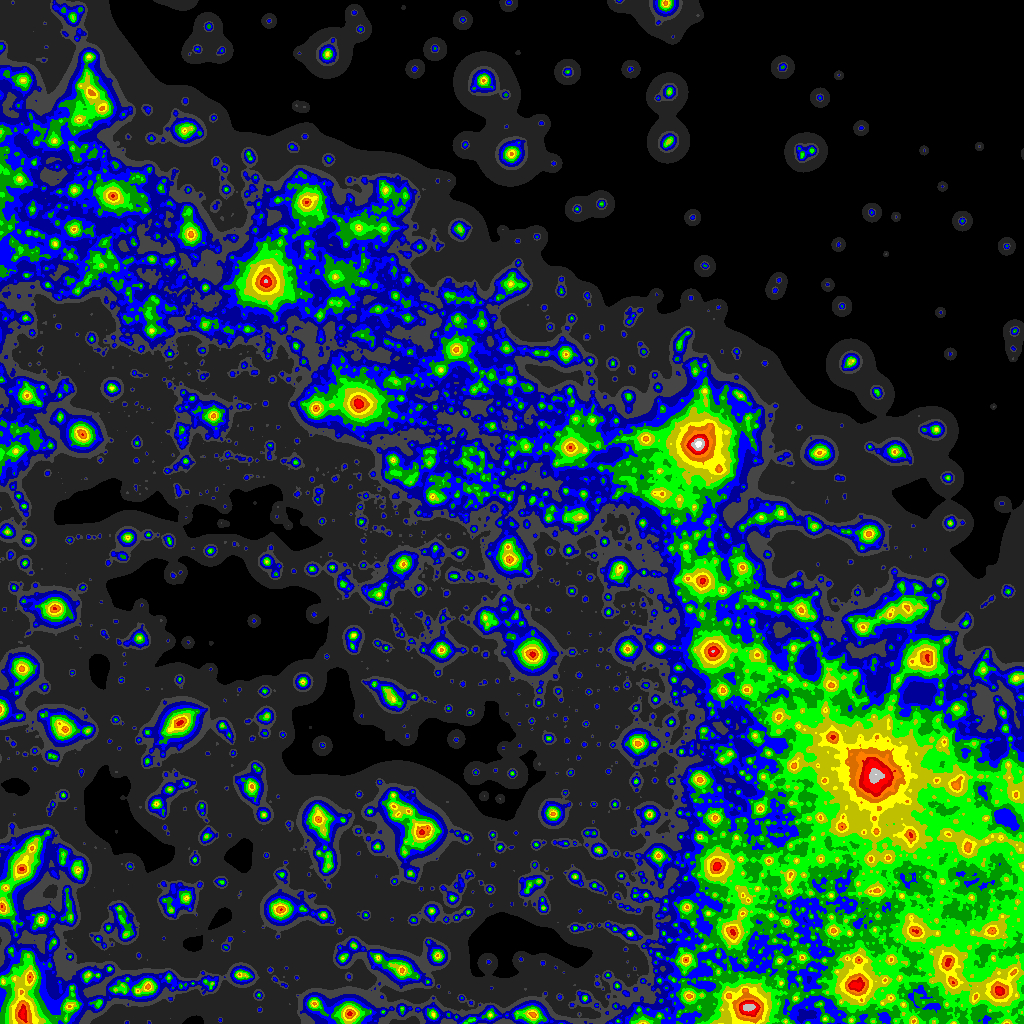
Light Pollution Map California Printable Maps
Light pollution is a global issue. This became glaringly obvious when the World Atlas of Night Sky Brightness, a computer-generated map based on thousands of satellite photos, was published in 2016. Available online for viewing, the atlas shows how and where our globe is lit up at night. For instance, the website Light Pollution Map shows that the eastern half of the U.S. has the most light pollution (as evidenced by a lot of yellow on the map), with similar high amounts of light pollution along the coast of California and the Pacific Northwest.
Light pollution exists in two forms: Sky glow (also known as artificial sky glow, light domes, or fugitive light) is the brightening of the night sky from human-caused light scattered in the atmosphere, Glare is the direct shining of light. Light pollution is increasing globally, in both developed and developing countries. Most of the data on the growth of light pollution comes from a handful of weather satellite images and computer modeling using population trends. An examination of North American light emissions shows a roughly six percent annual increase from 1947 to 2000. 
BlackburnNews com Kingsville residents calls for bylaw to restore
For the purpose of this atlas, we set the level of artificial brightness under which a sky can be considered "pristine" at 1% of the natural background. The dark gray level (1 to 2%) sets the point where attention should be given to protect a site from a future increase in light pollution. Blue (8 to 16%) indicates the approximate level. EnviroAtlas Interactive Map | US EPA EnviroAtlas EnviroAtlas Interactive Map This easy to use, interactive mapping application does not require any GIS skills to use and provides ready access to 500+ maps and multiple analysis tools. Need help getting started? View tutorials for using the Interactive Map. See what data we have available.